· Todd Martin · Home Maintenance · 13 min read
Do You Buy Same Size Rug Pad
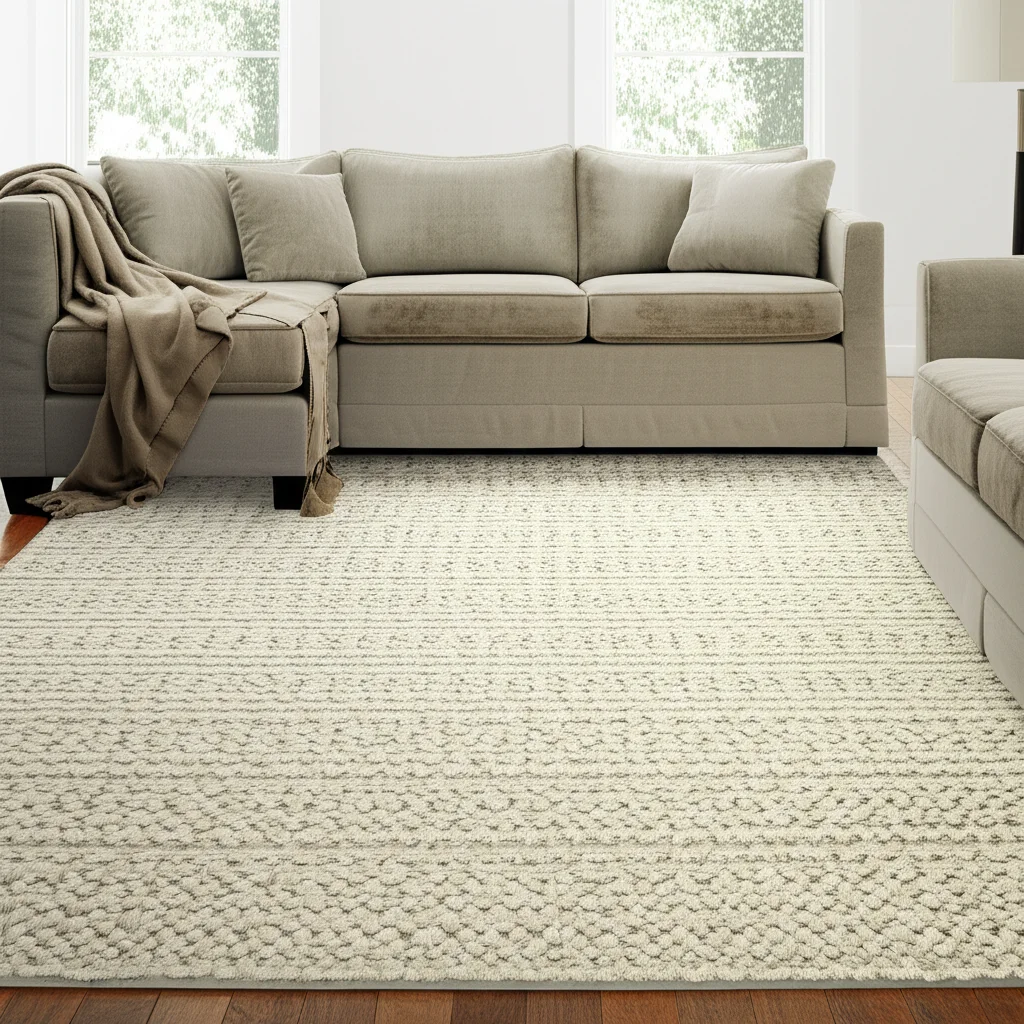
Optimizing Your Rug Pad: Do You Buy the Same Size as Your Rug?
Many people wonder about the correct size for a rug pad. It is a common question. “Do you buy same size rug pad?” This question often comes up when choosing floor coverings. The answer is important for your rug’s safety and longevity. Getting the right size rug pad makes a big difference. It helps your rug stay in place. It also protects your floors.
This article will explain why your rug pad should usually be smaller than your rug. We will cover exact sizing guidelines. You will learn how to measure correctly. We will also discuss different rug pad types. You will understand the benefits of proper sizing. We will share common mistakes to avoid. Finally, we will give tips for installing your rug pad.
Takeaway
- Do not buy a rug pad the same size as your rug.
- The rug pad should be smaller, typically by 1 inch on each side.
- This creates a 1-inch border of rug around the pad.
- A smaller pad prevents edges from showing or tripping hazards.
- Proper sizing improves safety, extends rug life, and protects floors.
Clear Answer to the Main Query
You should not buy the same size rug pad as your rug. A rug pad typically needs to be 1 inch shorter on all four sides than your rug. This means the pad is 2 inches shorter in both length and width overall. This specific sizing prevents the pad from showing and creates a safe, stable foundation.
Understanding Rug Pad Sizing: Is Same Size Best?
When you buy a new rug, you often consider a rug pad. This is a smart choice for many reasons. But the sizing can be confusing. Many people think a rug pad should be exactly the same size as the rug. This is a common misunderstanding.
However, buying the same size rug pad is not the best approach. A pad that is too large can create problems. It might stick out from under the rug. This looks bad and creates a tripping hazard. We want the rug pad to be invisible under your rug. The goal is to provide hidden support and protection.
A rug pad’s job is to protect your floor and keep the rug from slipping. It also adds cushioning. For these benefits to work best, the pad needs to fit properly. The correct fit ensures maximum effectiveness. It also keeps your rug looking neat and tidy.
The Golden Rule: Why Your Rug Pad Should Be Smaller
The general rule for rug pad sizing is simple. Your rug pad should be 1 inch smaller on each of the four sides than your rug. This means the pad will be 2 inches shorter in both length and width than the rug itself. For example, if you have an 8x10 foot rug, your rug pad should measure 7 feet 10 inches by 9 feet 10 inches. This difference is important.
This 1-inch border of rug allows the rug’s edges to gently slope to the floor. It prevents a noticeable ridge or edge from the pad. It also ensures the rug’s edges do not curl up. A smaller pad helps keep the rug flat and secure. It makes the rug look better and last longer.
Another benefit of the smaller pad is preventing floor damage. If the pad extends beyond the rug, it can collect dirt. This dirt can then scratch your floor. The correct sizing keeps the pad fully hidden. This protects both your rug and your floor.
How a Smaller Pad Helps
- Prevents Tripping Hazards: A hidden pad means no edges to trip over.
- Aesthetic Appeal: The rug lies flat and smooth, with no pad showing.
- Floor Protection: The pad stays under the rug, preventing dirt accumulation at the edges.
- Improved Stability: The rug’s edges can grip the floor slightly, adding stability.
Measuring for the Perfect Rug Pad Fit
Measuring your rug carefully is the first step. Do not just rely on the rug’s stated size. Sometimes, rugs vary slightly from their listed dimensions. Use a tape measure to get accurate measurements of your rug’s length and width. Measure the rug from edge to edge.
Once you have your rug’s precise dimensions, subtract 2 inches from both the length and the width. This will give you the ideal dimensions for your rug pad. For instance, if your rug is exactly 5 feet by 7 feet, your rug pad should be 4 feet 10 inches by 6 feet 10 inches. Always double-check your measurements. Accuracy is key for the best fit.
If your rug has an unusual shape, like a circle or an oval, the principle remains similar. For circular rugs, measure the diameter. Subtract 2 inches from that diameter for your circular pad. For ovals or other unique shapes, you might need to trim the pad to match the rug’s outline. Always ensure the pad remains slightly smaller than the rug’s edge.
Steps to Measure Properly
- Lay Your Rug Flat: Unroll the rug completely on a flat surface.
- Measure Length: Measure from one end of the rug to the other.
- Measure Width: Measure from one side of the rug to the other.
- Subtract for Pad: Subtract 2 inches from both the length and width measurements. This is your rug pad size.
Types of Rug Pads and Their Sizing Considerations
Different types of rug pads offer various benefits. They also have specific sizing needs. Understanding these differences helps you choose the right pad. The most common types are grip pads, cushion pads, and multi-purpose pads. Each serves a different function.
Grip pads are thin and designed primarily to prevent slipping. They are perfect for high-traffic areas. These pads often have an open weave or a waffle design. Their main purpose is to keep the rug firmly in place. Because they are thin, the 1-inch rule is especially important. A grip pad showing from under the rug is very noticeable.
Cushion pads are thicker. They add comfort and insulation under your rug. These pads are ideal for living rooms or bedrooms. They make the rug feel softer underfoot. Cushion pads also provide sound absorption. Even with a thicker pad, the 1-inch smaller rule still applies. You want the edges of the rug to lie flat.
Multi-purpose pads combine grip and cushion features. They offer the best of both worlds. These pads are a popular choice for many homeowners. They provide good non-slip properties and decent comfort. Regardless of the pad type, consistent sizing is crucial. The goal is always for the pad to be invisible.
Choosing the right type depends on your needs. Do you need more grip, more comfort, or a balance of both? Once you decide on the type, focus on the precise sizing. A properly sized pad enhances both safety and aesthetics. Remember, a rug pad also extends the life of your rug by absorbing impact. You can learn more about caring for your rug pad here.
Benefits of a Properly Sized Rug Pad
Using a rug pad offers many advantages. A properly sized rug pad maximizes these benefits. First, and most important, is safety. A rug without a pad can slip and slide. This creates a serious fall risk, especially for children and the elderly. A correctly sized non-slip pad keeps your rug firmly anchored. This prevents accidents. It also helps with general rug stability. You can also explore how to secure a rug on carpet here.
Second, a rug pad extends your rug’s lifespan. The pad acts as a buffer between the rug and the hard floor. It absorbs impact from foot traffic. This reduces wear and tear on the rug’s fibers. Without a pad, rug fibers get crushed and abraded against the floor. This leads to premature aging and damage. A good pad makes your rug last longer and look better.
Third, rug pads protect your flooring. The pad creates a barrier. This barrier prevents dirt, dust, and debris from scratching your hardwood or tile floors. Some pads also prevent color transfer from the rug to the floor. This is especially important for rugs with darker dyes. A rug pad also adds a layer of insulation. This can help with energy efficiency and noise reduction. Properly placed rugs also enhance room design. You can learn tips on how to place a rug under a sofa here.
Finally, a rug pad adds comfort. Thicker pads provide extra cushioning underfoot. This makes walking on your rug more pleasant. It also creates a more luxurious feel. The added padding can make a thin rug feel much more substantial. This small investment brings significant returns in safety, longevity, protection, and comfort.
Common Rug Pad Sizing Mistakes to Avoid
Making mistakes with rug pad sizing is easy if you are not careful. One of the most frequent errors is buying a rug pad that is too large. As discussed, a pad that extends beyond the rug’s edge creates a tripping hazard. It also looks unsightly. The pad might show, ruining the clean lines of your rug. This defeats the purpose of having a hidden layer of protection.
Another common mistake is buying a rug pad that is too small. While less common than being too large, a pad that is significantly smaller than the recommended dimensions can still cause problems. If the pad is too small, it will not provide enough coverage. This means large sections of your rug might still slip. It will also not offer adequate floor protection for the entire rug area. The rug might also bunch up or wrinkle around the edges where there is no pad support.
Some people ignore the specific type of rug when choosing a pad. For instance, a very thin rug might need a slightly different pad thickness. However, the sizing rule of 1 inch smaller on each side remains constant. Another error is not measuring the rug itself. Relying solely on the manufacturer’s stated size can be risky. Rugs can vary slightly. Always measure your rug to ensure accuracy.
Lastly, some people forget to trim the rug pad if it comes slightly oversized. Many pads are sold in standard sizes. You may need to trim it down. We will cover that in the next section. Avoiding these common errors ensures your rug pad works effectively. It helps your rug look its best. It also maximizes all the benefits a pad offers.
Trimming and Installing Your Rug Pad for a Seamless Look
Once you have your rug and a rug pad, installation is the next step. If your rug pad did not come in the exact size you need, you will likely need to trim it. This is a simple process. First, lay your rug upside down on a clean, flat surface. This could be your floor or a large table.
Next, place the rug pad on top of the upside-down rug. Center the pad carefully. Ensure there is an even 1-inch border of rug showing around all four sides of the pad. This helps you trim accurately. Use a permanent marker to draw a line around the rug pad, following the 1-inch border. This line will be your cutting guide.
Now, carefully cut along the marked line. Use sharp scissors or a utility knife. A utility knife with a straight edge works well for straight cuts. Take your time to ensure a clean, even edge. This makes your pad look neat. After trimming, remove any excess material. You are now ready to place the pad.
To install, simply place the trimmed rug pad on your clean floor where the rug will go. Then, carefully lay your rug on top of the pad. Center the rug over the pad. Adjust the rug until it sits perfectly on the pad, with the 1-inch border of rug showing on all sides. This creates a secure, seamless look. This process is key to enjoying all the benefits of your rug pad. Proper installation also involves knowing how to attach a rug pad to a rug, which you can read about here.
Frequently Asked Questions
Q1: Can I use a rug pad that is too small for my rug?
A rug pad that is too small does not provide full coverage. Large sections of your rug may still slip. It also offers less protection for your floor. This can lead to uneven wear on the rug. The rug might also bunch up in areas without support.
Q2: What if my rug pad is slightly too large? Can I still use it?
If your rug pad is slightly too large, you should trim it. A pad extending beyond the rug edges creates a visible line. It also creates a tripping hazard. Trimming it to the recommended 1-inch smaller size on all sides is best. This ensures safety and a clean appearance.
Q3: Do all rugs need a rug pad, or just certain types?
While not all rugs strictly need a pad, most benefit greatly from one. Pads are essential for preventing slipping on hard floors. They are also important for adding comfort and protecting both the rug and the floor from wear. High-traffic areas almost always need a pad.
Q4: How do I cut a rug pad if it’s too big?
To cut a rug pad, lay your rug upside down. Center the oversized pad on it, ensuring a 1-inch rug border all around. Mark the cutting line on the pad with a marker. Then, use sharp scissors or a utility knife to carefully cut along the marked line.
Q5: What is the best material for a rug pad?
The best material depends on your floor type and needs. Felt and rubber pads are popular. Felt provides cushioning and insulation. Natural rubber offers excellent grip without sticking to floors. A combination of felt and rubber often provides the best of both worlds.
Conclusion
Understanding the correct rug pad size is crucial for your home. We have learned that you do not buy same size rug pad. Instead, choosing a rug pad that is 1 inch smaller on all four sides than your rug is the ideal approach. This small difference makes a big impact. It ensures your rug lies flat and stays in place.
Proper rug pad sizing provides vital safety benefits. It eliminates tripping hazards from a shifting rug. It also protects your valuable flooring from scratches and wear. Moreover, a well-fitted rug pad extends the life of your rug by cushioning foot traffic. It also adds a layer of comfort to your living space.
Take the time to measure your rug accurately. Select the right type of pad for your needs. If needed, trim the pad to the perfect dimensions. By following these simple guidelines, you will enhance the beauty and functionality of your rugs. This small effort leads to a safer, more comfortable, and longer-lasting home environment. Choose wisely and enjoy your improved space.
- rug pad
- rug sizing
- rug protection
- non-slip rugs
- home decor

Todd Martin
Senior Writer
With over 15 years of experience in home renovation and design, I started HEG to share what I’ve learned with homeowners who want to create spaces that are both beautiful and functional. I’ve always believed in a hands-on approach, and over the years, I’ve picked up practical solutions that actually work. Through HEG, I aim to make home improvement more approachable, sharing real tips that help you create a home you truly love.