· Todd Martin · Home HVAC Systems · 21 min read
Does Your Heat Pump Use An O Wire Or B Wire
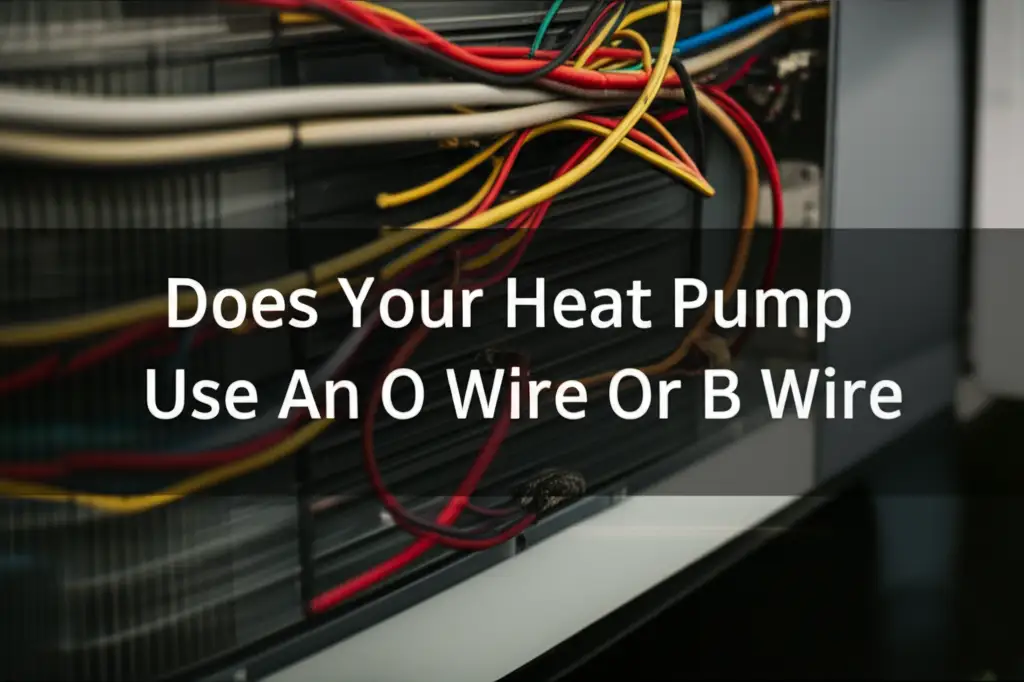
Understanding Heat Pump Wiring: O Wire or B Wire
Have you ever wondered about the wires inside your thermostat? Specifically, are you curious if your heat pump uses an O wire or B wire? This is a common question, and understanding the difference helps you better grasp how your heating and cooling system operates. It is important to know which wire controls the reversing valve on your heat pump. Knowing this can help with troubleshooting or setting up a new thermostat.
In this comprehensive guide, we will explore the critical role of the O and B wires in heat pump systems. We will explain how the reversing valve functions. We will also show you how to identify your specific wiring setup. Get ready to decode the secrets of your heat pump’s control system. We aim to make these technical details clear and easy to understand for everyone.
Takeaway: Identify Your Heat Pump’s Reversing Valve Control
- Most heat pumps use an O wire. This means the reversing valve energizes in cooling mode.
- Some older or specific models use a B wire. This means the reversing valve energizes in heating mode.
- Check your thermostat terminals or wiring diagram. This is the surest way to know which wire your system uses.
- Correct wiring is vital. It ensures your heat pump switches between heating and cooling properly.
Your heat pump likely uses an O wire to control its reversing valve, which activates when the system is in cooling mode. While less common, some heat pumps, especially older or specific brands like Bryant or Carrier, may use a B wire, energizing the reversing valve in heating mode instead. The wire selection determines how your heat pump switches between providing warmth and cool air for your home.
Basics of Heat Pump Operation
Heat pumps are truly remarkable devices. They provide both heating and cooling for your home. Unlike furnaces that burn fuel, heat pumps move heat. In winter, they pull heat from outside air into your home. In summer, they move heat from inside your home to the outside. This efficient process saves energy and lowers utility bills.
The ability to switch between heating and cooling is central to a heat pump’s design. This is where the reversing valve comes into play. Without this valve, your heat pump would only be able to perform one function, either heating or cooling. Understanding this basic function helps explain why the O or B wire is so important. It is the control signal for this crucial valve.
How a Heat Pump Works
A heat pump operates using a refrigerant cycle. This cycle involves an outdoor unit and an indoor unit. The outdoor unit contains a compressor, coils, and a fan. The indoor unit, often an air handler, also has coils and a fan. Refrigerant flows between these two units, absorbing and releasing heat.
In heating mode, the outdoor coils absorb heat from the cold outside air. The refrigerant then carries this heat indoors. The indoor coils release the heat, warming your home. In cooling mode, the process reverses. The indoor coils absorb heat from your home’s air. The refrigerant carries this heat outside, where the outdoor coils release it.
The Role of Refrigerant and Coils
Refrigerant is the vital fluid that transfers heat. It cycles through the heat pump, changing between liquid and gas states. This change allows it to absorb and release heat efficiently. The coils are where this heat exchange happens. They are designed with fins to maximize surface area for heat transfer.
The outdoor coil acts as an evaporator in heating mode and a condenser in cooling mode. The indoor coil does the opposite. This dual functionality is why heat pumps are so versatile. It allows them to provide comfort year-round. Regular cleaning of these coils is important for efficiency. For instance, knowing how to clean heat pump coils helps maintain system performance.
The Reversing Valve: Heart of a Heat Pump
The reversing valve is a vital component in any heat pump system. Think of it as the “heart” of your heat pump. This valve is responsible for changing the direction of refrigerant flow. By doing this, it allows the heat pump to switch between heating and cooling modes. Without a functional reversing valve, your heat pump would be stuck in one mode.
This small, but powerful, device contains internal mechanisms that redirect the refrigerant. When your thermostat calls for a change in mode, a signal goes to the reversing valve. This signal tells the valve to shift positions. This shift causes the outdoor coil to become the evaporator and the indoor coil to become the condenser, or vice versa. It is a critical part of how the system provides year-round comfort.
How the Reversing Valve Works
The reversing valve typically has four ports and a sliding mechanism. Two ports connect to the suction and discharge lines of the compressor. The other two ports connect to the outdoor and indoor coils. When the valve shifts, it redirects the refrigerant’s path. This changes which coil acts as the evaporator (absorbing heat) and which acts as the condenser (releasing heat).
In cooling mode, the refrigerant absorbs heat indoors and releases it outdoors. In heating mode, it absorbs heat outdoors and releases it indoors. The reversing valve ensures this flow reversal happens correctly. Its precise operation is what makes a heat pump such a flexible system.
Why is it so Important?
The reversing valve is essential for a heat pump’s dual-purpose capability. Without it, a heat pump would simply be an air conditioner or a cooling-only system. Its proper function ensures your home remains comfortable in all seasons. If this valve fails, your heat pump will likely only operate in one mode. For instance, it might only heat, even when you select cooling on your thermostat.
Understanding the reversing valve’s role helps us appreciate the importance of the control wire. This wire, whether O or B, is the direct command link to this crucial component. It ensures the valve shifts promptly and accurately. This allows your heat pump to deliver the desired temperature.
The O Wire: Standard for Cooling Mode Activation
The O wire is the most common control wire used for the reversing valve in modern heat pump systems. It stands for “Orange” and typically connects to the “O” terminal on your thermostat. This wire sends a signal to the outdoor unit. This signal tells the reversing valve to switch to cooling mode.
In most heat pump setups, the reversing valve is energized (receives power) when you want cooling. This means the default state of the valve, without power, is heating mode. When the O wire gets power from the thermostat, it activates the reversing valve. This activation then reverses the refrigerant flow, causing your heat pump to start cooling your home. This setup is prevalent among many heat pump manufacturers.
How the O Wire Functions
When your thermostat calls for cooling, it sends 24 volts of alternating current (VAC) down the O wire. This voltage energizes a solenoid coil inside the reversing valve. The solenoid then moves a piston or slide, which redirects the refrigerant flow. This allows the outdoor unit to become the condenser, and the indoor coil to become the evaporator. Simply put, it ensures your heat pump extracts heat from indoors and expels it outdoors.
When the thermostat no longer calls for cooling, the power to the O wire is cut. The reversing valve returns to its default state. This default state is usually heating mode. This makes the system ready to provide warmth when needed. This design offers a reliable and efficient way to manage temperature transitions.
Common O Wire Systems
Most major heat pump brands use the O wire for cooling mode activation. This includes manufacturers like Trane, Rheem, York, Lennox, and many more. If you have a relatively new heat pump system, it is highly probable that it uses an O wire. You will usually see an orange wire connected to an “O” terminal on your thermostat’s sub-base.
Always check your specific unit’s wiring diagram or your thermostat’s instruction manual to confirm. This ensures you are setting up or troubleshooting your system correctly. Knowing your system uses an O wire helps in selecting compatible thermostats. It also assists in understanding system behavior.
The B Wire: Less Common Heating Mode Activation
While the O wire is the standard, some heat pumps, particularly older models or specific brands, use a B wire. The B wire’s function is the opposite of the O wire. It energizes the reversing valve when the system is in heating mode. This means the default state of the reversing valve, without power, is cooling mode.
When the B wire receives power from the thermostat, it activates the reversing valve to switch into heating mode. This setup is less common today. However, it is important to be aware of it, especially if you have an older heat pump system. Brands like Bryant and Carrier historically used the B wire configuration on some of their models. It is crucial to identify which wire your system uses. Using the wrong setting on a thermostat can cause incorrect operation.
How the B Wire Functions
When your thermostat calls for heating, it sends 24 VAC to the B wire. This energizes the reversing valve. The valve then shifts to direct refrigerant flow for heating. In this configuration, the outdoor coil becomes the evaporator, and the indoor coil becomes the condenser. This means your heat pump absorbs heat from outside and releases it indoors.
When the thermostat no longer calls for heating, power to the B wire is cut. The reversing valve returns to its default, unenergized state. This unenergized state is typically cooling mode. This design ensures the system is ready to cool when heating is not needed. It is a different approach but achieves the same goal of dual-mode functionality.
Specific Applications of B Wire Systems
You might encounter a B wire if you have an older Bryant or Carrier heat pump. These systems were designed with the reversing valve energized in heating mode. It is less common in modern installations. However, this distinction is crucial when replacing an old thermostat with a new one. Many universal thermostats have settings for both “O” and “B” wires. You must select the correct one during setup.
Misconfiguring this setting can lead to issues. For example, your heat pump might blow cold air when you want heat, or vice versa. Always consult your heat pump’s wiring diagram or a professional if you are unsure. Knowing about the B wire helps you troubleshoot unexpected behavior.
Identifying Your Heat Pump’s Wiring
Figuring out whether your heat pump uses an O wire or a B wire is a critical step for proper thermostat installation or troubleshooting. It is not always obvious just by looking at the wire color, as wire colors can sometimes vary. However, there are a few reliable methods you can use to confirm your system’s configuration. This process usually involves checking your current thermostat’s wiring or examining the outdoor unit’s documentation.
Taking the time to correctly identify your system’s wiring ensures that your heat pump operates efficiently. Incorrect wiring can lead to discomfort, increased energy bills, and even damage to your HVAC system. I want to emphasize that knowing how to tell if your heat pump uses an O or B wire is a valuable skill for any homeowner.
Checking Your Thermostat Wiring
The easiest place to start is at your existing thermostat. Carefully remove the thermostat’s cover from its sub-base. You will see several wires connected to different terminals. Look for a wire connected to a terminal labeled “O” or “B”.
- O Terminal: If you see a wire connected to the “O” terminal, your system likely uses an O wire. This means the reversing valve is energized for cooling. The wire itself is often orange, but always go by the terminal label.
- B Terminal: If you find a wire connected to the “B” terminal, your system uses a B wire. This indicates the reversing valve is energized for heating. The wire is typically blue or brown, but again, the terminal label is key.
If both O and B terminals have wires, you might have a different type of system or a more complex setup. In such cases, it is best to consult a professional or your heat pump’s manual. Remember to turn off power to your HVAC system at the breaker before touching any wires for safety.
Consulting Your Heat Pump’s Manual or Wiring Diagram
If you cannot determine the wire type from the thermostat, the next best source is your heat pump’s manual or wiring diagram. These documents often come with the outdoor unit or can be found online using your unit’s model number. The wiring diagram will clearly show which terminal on the control board corresponds to the reversing valve and whether it is an O or B terminal.
Sometimes, the wiring diagram is inside the access panel of your outdoor unit. Be extremely cautious when opening any electrical panels. If you are not comfortable doing this, it is always safer to call an HVAC technician. They have the expertise to safely access and interpret these diagrams. This method offers the most definitive answer regarding your system’s configuration.
Thermostat Compatibility and Setup
Once you have identified whether your heat pump uses an O wire or a B wire, selecting and setting up the correct thermostat becomes much simpler. Most modern smart and programmable thermostats are designed to be compatible with both O and B wire systems. However, you must configure the thermostat correctly during installation. Incorrect settings can lead to your heat pump operating in reverse or not at all.
This step is crucial for ensuring your heating and cooling system responds accurately to your desired temperature settings. A thermostat is the brain of your HVAC system, sending signals to the heat pump. Therefore, its proper setup is vital for overall home comfort and energy efficiency.
Choosing the Right Thermostat
When buying a new thermostat, check its specifications for heat pump compatibility. Most will state “compatible with heat pump systems” or similar. More importantly, ensure it has a configurable O/B terminal. This means you can set the thermostat to energize the O terminal for cooling (the default for most heat pumps) or the B terminal for heating (for specific heat pumps).
Look for thermostats that offer clear installation instructions. They often guide you through a setup menu where you select your system type. This is where you will tell the thermostat whether it should send a signal to “O” or “B” for reversing valve control. Digital thermostats make this selection simple through their display.
Configuring Your Thermostat for O or B Wire
After physically wiring your new thermostat, you will need to enter the installer or setup menu. This menu is usually accessed by holding a specific button or sequence of buttons. Within this menu, look for an option related to “O/B terminal function,” “reversing valve,” or “system type.”
- For O wire systems: Select the setting that energizes “O” in cooling mode. This is often labeled “O (cool)” or “O/B set to O.”
- For B wire systems: Select the setting that energizes “B” in heating mode. This might be labeled “B (heat)” or “O/B set to B.”
Always follow your specific thermostat’s manual carefully. Getting this setting right is critical. If set incorrectly, your heat pump might run heat when you want cool, or vice versa. This can be confusing and frustrating. A correct setup ensures seamless transitions between heating and cooling as needed.
Troubleshooting Common Wiring Issues
Wiring a heat pump thermostat can seem simple, but issues can arise. Knowing how to troubleshoot common wiring problems saves you time and frustration. Many issues stem from miswired terminals or incorrect thermostat settings. Understanding the function of the O and B wires is key to solving these problems. Always prioritize safety. Turn off power at the circuit breaker before you begin any inspection or wiring work.
Troubleshooting helps you pinpoint the exact cause of a malfunction. This knowledge empowers you to potentially fix minor issues yourself. However, always know when to call a professional. Complex electrical problems can be dangerous to handle without expertise.
Heat Pump Blowing Cold Air in Heat Mode
This is a classic symptom of an incorrect O/B wire setting. If your heat pump is supposed to use an O wire (energized for cooling), but your thermostat is set to energize B for heating, the system will behave incorrectly. The reversing valve will be in the wrong position.
Solution: Check your thermostat’s installer settings. Ensure the O/B terminal function is set correctly for your specific heat pump. If your system uses an O wire, make sure the thermostat is configured to energize O in cooling mode. If your system uses a B wire, ensure it is set to energize B in heating mode. Re-verify the physical wire connections at both the thermostat and the outdoor unit.
Heat Pump Blowing Hot Air in Cool Mode
This is the opposite problem but has a similar cause. If your thermostat is set for an O wire but your heat pump actually uses a B wire, this can happen. The reversing valve will remain in its heating position when you call for cooling.
Solution: Again, review your thermostat’s O/B settings. Adjust them to match your heat pump’s specific wiring configuration. If your unit is a B-wire type, ensure the thermostat is set to activate B for heating, leaving the cooling mode as the default. Also, check that all wires are securely connected to their correct terminals. Loose connections are a common cause of unexpected behavior.
System Not Responding or No Power
If your heat pump does not respond at all or your thermostat has no power, it could be a simple wiring mistake. A loose C (common) wire connection often causes power issues. The C wire provides continuous 24V power to the thermostat.
Solution: First, check the circuit breaker to ensure power is on. Then, inspect all wire connections at the thermostat. Make sure each wire is firmly seated in its terminal. Pay close attention to the C wire. If it is loose or disconnected, the thermostat may not power on. Also, verify that the low-voltage fuse on your indoor air handler’s control board is not blown. Replacing a blown fuse can restore power. If these steps do not work, it is time to call a professional HVAC technician.
When to Call a Professional HVAC Technician
While identifying your heat pump’s O or B wire and troubleshooting minor issues is helpful, there are times when calling a professional HVAC technician is essential. Working with electrical components and complex systems like heat pumps carries risks. Safety should always be your top priority. Furthermore, some problems are too intricate for a DIY approach. Knowing when to step back and seek expert help can prevent further damage to your system or even personal injury.
A professional technician has specialized tools, training, and experience. They can quickly diagnose complex issues and perform repairs safely and effectively. I encourage you to reach out to an expert if you encounter any uncertainty during your heat pump’s maintenance or repair.
Complex Wiring or Undetermined Issues
If you cannot confidently identify whether your system uses an O or B wire, or if you find the wiring configuration confusing, call a professional. Trying to guess can lead to miswiring, which can damage your thermostat or heat pump’s control board. If you have followed all troubleshooting steps and your heat pump is still not operating correctly, a deeper issue might be at play.
Professionals can read complex wiring diagrams specific to your unit. They can use specialized meters to test voltage and continuity, accurately diagnosing electrical faults. They will ensure your system is wired correctly from the thermostat to the outdoor unit.
Reversing Valve Malfunctions
If you suspect the reversing valve itself is faulty, it is definitely a job for a professional. A faulty reversing valve can cause your heat pump to only heat or only cool, regardless of the thermostat setting. The valve can stick due to internal issues or electrical failure.
Replacing a reversing valve is a highly technical procedure. It involves evacuating refrigerant, brazing copper lines, and recharging the system. These tasks require specialized equipment and EPA certifications. Attempting this without proper training is dangerous and illegal due to refrigerant handling regulations.
Regular Maintenance and Diagnostics
Even if your heat pump is working fine, scheduling regular maintenance with an HVAC professional is a smart investment. Regular tune-ups can prevent costly breakdowns and extend the life of your unit. During these visits, technicians can check all electrical connections, test components, and ensure your system is running efficiently.
They can confirm your O or B wire setup is correct and troubleshoot any intermittent issues before they become major problems. A well-maintained heat pump also runs more efficiently, saving you money on energy bills. For instance, knowing how often to service an air source heat pump ensures longevity and optimal performance.
The Importance of Correct Wiring for Heat Pump Efficiency
Correct wiring is not just about getting your heat pump to work; it is fundamental to its efficiency and longevity. When your O wire or B wire, along with other control wires, is correctly installed and configured, your heat pump operates as intended. This means smooth transitions between heating and cooling modes, accurate temperature control, and minimized energy waste. Miswiring, even seemingly small errors, can force your system to work harder, leading to higher energy bills and premature wear on components.
Every connection in your heat pump’s wiring system plays a role in its overall performance. From the thermostat sending signals to the outdoor unit receiving them, precision is key. Understanding the function of each wire helps you appreciate why correct installation is so vital for your home’s comfort and your wallet.
Optimal Performance and Energy Savings
When the O or B wire correctly signals the reversing valve, the heat pump can efficiently switch modes. This means it delivers heating or cooling precisely when needed. An incorrectly wired system might struggle to switch modes, or it might try to heat and cool at the same time. This wastes significant energy. It also puts undue stress on the compressor, a very expensive component.
Proper wiring ensures the heat pump’s defrost cycle operates correctly, too. A defrost cycle is crucial in cold weather to prevent ice buildup on the outdoor coil. If the defrost cycle is hampered by incorrect wiring, the unit’s efficiency drops dramatically. This leads to higher running costs and less effective heating. You want your system to be as efficient as possible. This also links to general operational aspects, such as how long an air source heat pump takes to heat water, highlighting the importance of overall system efficiency.
Preventing System Damage and Extending Life
Beyond efficiency, correct wiring protects your heat pump from damage. Incorrect voltage signals or crossed wires can short out control boards or damage the reversing valve solenoid. These repairs can be very costly. A well-wired system ensures components receive the correct signals and power. This reduces the risk of electrical damage.
Furthermore, a heat pump that runs correctly experiences less strain. Components like the compressor and fans operate within their design parameters. This extends the overall lifespan of the unit. Conversely, a system that frequently struggles due to wiring errors will wear out faster. Investing time in correct wiring or professional installation upfront pays dividends in terms of reliability and longevity.
Future Trends in Heat Pump Technology
The world of heating and cooling is constantly evolving. Heat pump technology is at the forefront of this change. While the basic principles of O wire and B wire control remain, future trends point towards even smarter, more integrated systems. We are seeing advancements in connectivity, diagnostic capabilities, and energy management. These innovations aim to make heat pumps even more efficient, user-friendly, and environmentally friendly.
As technology progresses, heat pumps are becoming more common in homes. This is due to their efficiency and versatility. The foundational knowledge of wiring, like understanding the O and B wires, will remain relevant. However, the ways we interact with and manage these systems will likely change.
Smart Thermostats and Advanced Control
Smart thermostats are already prevalent, offering remote control and learning capabilities. They can optimize energy use based on your schedule and preferences. In the future, these devices will become even more sophisticated. They will integrate seamlessly with other smart home systems. This could mean more granular control over your heat pump’s operations, possibly even predicting your needs.
Advanced control algorithms will likely minimize the wear on components like the reversing valve. They will ensure it switches modes only when necessary. This can contribute to extending the system’s life. We might also see more intuitive user interfaces that simplify setup, reducing the confusion around O vs. B wire selection.
Integration with Home Energy Management Systems
Future heat pumps will likely be central to comprehensive home energy management systems. These systems will coordinate various energy-consuming appliances, including electric vehicles and solar panels. This integration will optimize energy use across the entire home. For instance, a heat pump might adjust its operation based on real-time electricity prices or solar energy availability.
- heat pump wiring
- O wire
- B wire
- thermostat wiring

Todd Martin
Senior Writer
With over 15 years of experience in home renovation and design, I started HEG to share what I’ve learned with homeowners who want to create spaces that are both beautiful and functional. I’ve always believed in a hands-on approach, and over the years, I’ve picked up practical solutions that actually work. Through HEG, I aim to make home improvement more approachable, sharing real tips that help you create a home you truly love.