· Davia Murnell · Figurative Language · 20 min read
What Does Chicken In The Bread Pan Mean
Understanding ‘Chicken in the Bread Pan’
Have you ever heard a phrase that leaves you scratching your head, wondering about its true meaning? I certainly have. The expression “What Does Chicken In The Bread Pan Mean” is one such phrase. It sounds whimsical, perhaps even nonsensical, if you take it at face value.
This article aims to unravel the layers of meaning behind this curious idiom. We will explore its literal absurdity, its common figurative interpretation, and how context shapes its understanding. Prepare to discover the origins and applications of this unique saying, especially its connection to themes of financial scarcity and resourcefulness. Let’s dive in and demystify “chicken in the bread pan” together.
Takeaway
- “Chicken in the Bread Pan” is an idiom, not a literal description.
- It primarily symbolizes financial scarcity or difficulty.
- The phrase highlights a lack of resources, particularly food.
- Context is vital for understanding its intended meaning.
- It often implies resourcefulness during hard times.
The phrase “What Does Chicken In The Bread Pan Mean” serves as a vivid idiomatic expression. It refers to a situation of extreme financial scarcity or poverty. It illustrates a home where food, especially basic sustenance, is desperately lacking. The phrase implies an absence of traditional meal ingredients, showing hard times.
Deconstructing the Phrase: Literal vs. Figurative Interpretations
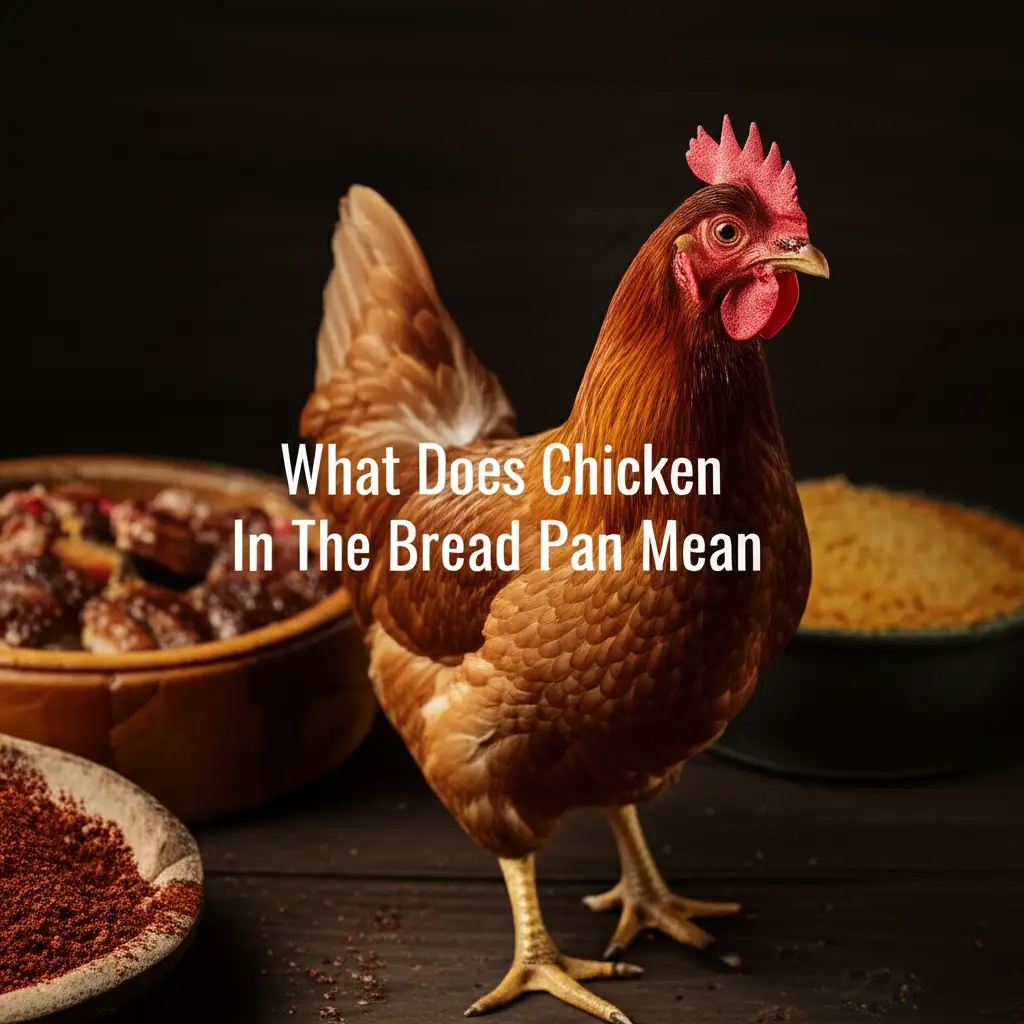
When we first hear “What Does Chicken In The Bread Pan Mean,” our minds might conjure a strange image. We picture a raw or cooked chicken sitting inside a baking pan meant for bread. This literal interpretation makes little sense in a culinary context. A bread pan holds dough to bake into a loaf. A chicken cooks in a roasting pan or a skillet. The two items do not typically belong together. This initial absurdity is a key part of the idiom’s power. It immediately signals that the phrase is not meant to be taken literally.
Figuratively, the phrase transforms into a powerful metaphor. It speaks volumes about a lack of resources. Imagine opening your bread pan to find it empty of dough. Now, imagine finding something completely out of place and unusable there, like a chicken. This image strongly conveys desperation. It suggests a household is so low on food that even the most basic items are missing. It also indicates an inability to prepare fundamental meals. This stark contrast emphasizes financial hardship and scarcity. The phrase becomes a shorthand for deep economic struggle.
The true meaning lies far beyond cooking instructions. It describes a situation where basic necessities are absent. It paints a picture of a pantry that is not just bare but paradoxically filled with something useless for the intended purpose. This symbolic emptiness is what the phrase effectively communicates. Understanding this distinction is crucial to grasping the idiom’s message. We move from a culinary oddity to a statement about living conditions.
Historical Roots and Common Sayings
Understanding “What Does Chicken In The Bread Pan Mean” often involves looking at its history. Many idioms develop from observation of common life situations. While the exact historical origin of this specific phrase is not widely documented in formal etymological texts, we can infer its roots. It likely emerged from times when people faced food insecurity. Bread was a staple food. It represented basic sustenance for many households. The bread pan, therefore, symbolized the availability of this fundamental food source.
The inclusion of “chicken” also holds significance. Chicken was often seen as a more luxurious or celebratory food than simple bread. It was not an everyday item for everyone, especially in poorer households. The idea of “chicken in the bread pan” suggests a deep irony. You don’t have bread, the basic necessity. Instead, you have something that might seem better, but it’s completely unusable in that context. It signifies a profound absence of what should be there, coupled with the presence of something irrelevant or out of reach.
This idiom shares similarities with other sayings about scarcity. Phrases like “bare cupboards” or “empty pantry” convey a similar message. However, “chicken in the bread pan” adds a unique twist. It introduces an element of misplacement or unsuitability. It is not just emptiness but a bizarre, unhelpful substitute. This adds a layer of ironic despair to the meaning. It highlights a situation where hope for basic food is dashed by something utterly unexpected and useless for that need. This is why the phrase resonates strongly with those who have faced or observed financial hardship. It captures the essence of struggling to meet fundamental needs.
The Nuance of Idiomatic Expressions
Idiomatic expressions are a fascinating part of language. They add richness and color to our communication. They also often puzzle those unfamiliar with their specific cultural context. The phrase “What Does Chicken In The Bread Pan Mean” is a perfect example of such an idiom. Its meaning cannot be deduced from the individual words themselves. Instead, it relies on shared cultural understanding. This is characteristic of idioms; they possess a meaning that is metaphorical, not literal.
These expressions often derive their power from vivid imagery. “Chicken in the bread pan” creates a very clear, if absurd, mental picture. This picture helps to convey the intended message effectively. It sticks in your mind, making the message memorable. This is why idioms are so effective at communicating complex ideas quickly. They condense a detailed situation into a simple, striking phrase. For instance, comparing this to another idiom like “frying pan into the fire,” both convey negative progression or bad situations, but “chicken in the bread pan” specifically targets resource scarcity. You can read more about other idioms here: What Does Frying Pan Into The Fire Mean.
Understanding idioms requires more than just knowing vocabulary. It demands an appreciation for cultural context and shared experiences. When someone says “chicken in the bread pan,” they are not actually talking about food preparation. They are signaling a specific kind of financial struggle. I believe that mastering idioms allows for deeper communication. It lets us connect with others on a more subtle and profound level. It shows an understanding of the nuances of language. This particular idiom is a powerful tool for describing a very specific type of economic hardship.
The Role of Context in Interpretation
Context is king when trying to decipher idioms. The setting, the speaker, and the surrounding conversation all influence the meaning. Without proper context, “What Does Chicken In The Bread Pan Mean” might remain a baffling statement. If someone says it while looking sadly at an empty pantry, the meaning becomes clear. They are expressing a lack of food and money. If they say it jokingly during a cooking class, it might just be a playful remark about a mistake.
Consider the speaker’s tone of voice. A mournful tone suggests genuine hardship. A lighthearted tone might imply a humorous exaggeration. The relationship between the speakers also plays a role. Close friends might use it as a shorthand for a shared understanding of tough times. Strangers might need more explanation. I have found that paying attention to these cues is vital. They provide the necessary framework for correct interpretation.
The historical or economic climate also provides context. In times of widespread economic depression, this phrase would immediately resonate. It would evoke a shared experience of scarcity. In times of plenty, it might sound more like an extreme example or a quaint saying from the past. For example, knowing that “bread pan” is a universally recognized item for baking bread can help understand the foundational element the idiom plays on. Even a discussion about Why Is Bread Pan In So Many Languages shows the centrality of this item. The true power of “chicken in the bread pan” lies in its ability to paint a vivid picture of distress, but only if the listener can connect it to its intended, non-literal context.
When “Chicken in the Bread Pan” Signifies Financial Struggle
The most prominent meaning of “What Does Chicken In The Bread Pan Mean” is its direct link to financial hardship. This idiom is a vivid way to describe a state of poverty or severe economic difficulty. It paints a picture of a household that cannot afford basic necessities. Specifically, it implies a lack of food. The bread pan, a symbol of daily sustenance, is empty of its intended contents. This signifies that even the most fundamental food item—bread—is unavailable.
The “chicken” in this context emphasizes the stark reality. It represents something valuable or desirable that is misplaced or impossible to access for its proper use. It’s not just that there’s no bread; it’s that whatever is there cannot fulfill the most basic need. Imagine a situation where one has a valuable item but cannot sell it for food. Or perhaps, they possess something completely useless in a moment of hunger. This paradoxical image deepens the sense of despair. It highlights a situation where resources are either absent or ironically unusable.
This phrase became common because it succinctly captured a universal human struggle. Many societies, at various points in history, have faced food shortages. People understood the profound impact of not having enough to eat. The idiom speaks directly to this experience. It conveys the feeling of an empty stomach and an empty wallet. When I hear this phrase, I immediately think of lean times. It evokes sympathy and understanding for someone facing significant economic challenges. It is a powerful linguistic tool to convey deprivation.
The Broader Economic Implications
Beyond individual households, “chicken in the bread pan” can reflect broader economic conditions. If many people use this phrase, it might indicate widespread economic downturn. It suggests that the average person is struggling to make ends meet. This idiom offers insight into societal well-being. It serves as a subtle indicator of financial health at a community level. When basic food items become scarce, it signals trouble in the larger economy.
For example, when jobs are scarce, and prices rise, people’s purchasing power decreases. This directly impacts their ability to buy food. The image of the empty bread pan then becomes a collective experience. It moves beyond a single family’s struggle to represent a communal challenge. It’s a sad but accurate reflection of economic instability. I believe paying attention to such idioms can offer valuable socio-economic insights. They tell us about the everyday reality of ordinary people.
This phrase also connects to the concept of food security. Food security means having consistent access to enough safe and nutritious food. “Chicken in the bread pan” implies food insecurity. It highlights a state where this basic need is not met. Governments and aid organizations often monitor food security levels. This idiom, though informal, vividly describes the human experience of this problem. It underscores the severity of a situation where essential sustenance is absent. It is a stark reminder of the importance of economic stability for all.
Beyond the Literal: Interpreting Symbolic Meanings
The phrase “What Does Chicken In The Bread Pan Mean” goes beyond simple descriptions of poverty. It carries deeper symbolic meanings related to hope, despair, and resilience. The bread pan itself symbolizes sustenance and the foundational elements of life. When it is empty or filled with something useless, it represents a crumbling of these foundations. It speaks to a lack of hope for improvement. The absence of dough means no bread, no comfort, and no basic meal. This symbolic emptiness is profound.
The “chicken,” in its literal sense, is an item of value. It is meat, a source of protein. Yet, its presence in the bread pan makes it unusable for its true purpose. This can symbolize resources that are ironically out of reach or misallocated. It might refer to valuable assets that cannot be converted into cash for food. Or it could mean having non-essential items when essentials are missing. I see it as a metaphor for being “resource-rich but cash-poor” or having items that do not solve immediate problems.
Consider the possibility of making bread from scratch to save money. Even then, you still need flour and yeast. If someone has a “chicken in the bread pan,” they likely lack even those basic ingredients. They might be trying to salvage a meal with what little they have. This ties into the concept of resourcefulness in difficult times. It is a desperate attempt to use something, even if it is completely inappropriate. This highlights the human spirit’s drive to survive, even in absurd circumstances. Sometimes, understanding literal actions, like how to remove bread pan from bread maker, can help us appreciate the common, everyday objects that form the basis of such figurative language.
Resourcefulness and Scarcity
The idiom also subtly touches upon themes of resourcefulness born from scarcity. While the image is one of despair, it can also evoke the desperate attempts to make do with what little one has. A chicken in a bread pan is clearly not for baking bread. But in extreme hunger, one might try to cook the chicken. This implies a desperate need to find any form of sustenance. It highlights a situation where creativity, however misguided, becomes a survival tactic.
This aspect adds a layer of complexity to the phrase. It is not just about having nothing; it is about the frustrating reality of having something unusable. It speaks to the ingenuity, or perhaps futility, of trying to transform non-essentials into essentials. I often think about how people innovate under pressure. This phrase, while grim, can also suggest that same human spirit. It is the spirit that tries to use a cake pan to bake bread when a proper bread pan is unavailable, though the idiom focuses on having the wrong type of food.
Ultimately, “chicken in the bread pan” is a testament to the human condition. It captures the struggle for survival in the face of overwhelming odds. It is a somber reminder of economic inequality and the constant battle against hunger. Yet, it also hints at the enduring will to find a way, even when the path is unclear or unusual. The phrase resonates because it tells a story of both hardship and the inherent human drive to persevere.
The Phrase’s Kin: “Chicken in the Bread Pan, Pickin’ Out Dough”
It is important to note that “What Does Chicken In The Bread Pan Mean” often appears as part of a longer saying. The more complete phrase is commonly, “Chicken in the bread pan, pickin’ out dough.” Understanding this fuller version clarifies the original idiom’s context and deepens its meaning. The addition of “pickin’ out dough” changes the literal image significantly. It moves from a static, misplaced chicken to one actively engaged in an impossible task. A chicken picking dough out of a bread pan is even more absurd than a static chicken. Chickens peck at feed, not baking dough.
This extended phrase reinforces the idea of utter desperation and confusion. If there is a chicken in the bread pan, and it’s “pickin’ out dough,” it means the pan is either empty or contains something totally unexpected. It emphasizes that the chicken is looking for food in a place where no chicken food exists. It’s a futile search for sustenance. The act of “picking out dough” suggests a desperate, perhaps even comical, attempt to find any nourishment. It paints a picture of a household so devoid of food that even the animals are confused and searching in the wrong places. This aligns perfectly with the core meaning of financial destitution.
The extended version also adds a touch of almost surreal despondency. It’s not just a lack of food; it’s a breakdown of normal order. The farm animal is in the kitchen, performing a nonsensical action. This absurdity further highlights the dire circumstances. I find this fuller phrase even more powerful in conveying the depth of hardship. It shows how profoundly lack of resources can distort everyday life. To learn more about this related saying, you can explore: What Does Chicken In The Bread Pan Pickin Out Dough Mean. This link provides a deeper dive into the nuances of the longer idiom, reinforcing our understanding of its core message.
Variations and Regional Usage
Like many common sayings, “chicken in the bread pan” might have regional variations. Different communities or dialects might use slightly altered versions. The core meaning, however, usually remains consistent: a sign of financial struggle. Understanding these variations can shed light on the phrase’s widespread use. It shows how a powerful image can adapt across different contexts while retaining its essence.
The idiom’s usage might also vary based on social groups. Older generations might use it more often. Younger people might be less familiar with it. This generational gap often exists with traditional idioms. I have noticed that sayings often get passed down, but their frequency of use can decline. However, the vivid imagery of “chicken in the bread pan” ensures its continued relevance in certain circles. It is a powerful phrase that succinctly conveys a very specific problem.
The adaptability of idioms is remarkable. They can be subtly changed yet still carry their original weight. The variations only serve to strengthen the idiom’s place in conversational language. They demonstrate its enduring power to describe a universal human experience. Whether heard as “chicken in the bread pan” or its longer form, the message of scarcity and hardship remains clear. It speaks to the resilience of language to capture complex realities in simple terms.
Applying the Metaphor to Modern Scenarios
While “What Does Chicken In The Bread Pan Mean” likely originated in a more agrarian or simpler economic era, its metaphorical power remains relevant today. Modern financial struggles may look different, but the core feeling of scarcity persists. The idiom can apply to situations where individuals or families face severe budget constraints. It speaks to times when essentials are hard to come by. It vividly describes a state where resources are depleted.
Think about the rising cost of living. Many families struggle to afford groceries. They might have to choose between food and rent. In such a scenario, their “bread pan” is figuratively empty. They might have non-essential items, or even essential items they cannot use, but no money for fundamental sustenance. The idiom perfectly captures this modern dilemma. It illustrates the challenge of making ends meet when expenses outpace income. It’s a powerful way to describe economic precarity.
The phrase can also extend beyond just food. It can represent a general lack of basic provisions or security. For example, a business that has valuable assets but no cash flow might be “chicken in the bread pan.” It possesses potential but cannot operate effectively. Or a student with significant talent but no funds for tuition faces a similar ironic situation. The idiom highlights a disconnect between potential or non-liquid assets and immediate, pressing needs. It reminds us that appearances can be deceiving. A person might own things, but still lack basic necessities.
Recognizing the Signs of Scarcity
Understanding this idiom helps us recognize signs of scarcity in our communities. When people talk about “making do” or struggling to put food on the table, they are echoing the sentiment of “chicken in the bread pan.” It’s a call for empathy and awareness. The phrase encourages us to look beyond the surface. It prompts us to consider the hidden struggles that some individuals face. I believe that being able to interpret such idioms makes us more attuned to social realities.
The idiom serves as a reminder of systemic issues as well. It’s not always individual failure that leads to an empty bread pan. Economic policies, job markets, and social safety nets all play a role. When many people experience “chicken in the bread pan” moments, it signals a need for broader solutions. It underscores the importance of food banks, social programs, and fair economic opportunities. It is a humble phrase that carries profound societal implications.
Ultimately, the enduring power of “What Does Chicken In The Bread Pan Mean” lies in its timeless appeal. It speaks to a fundamental human vulnerability. It encapsulates the stress and hardship of living without basic necessities. Even in our complex modern world, this simple idiom cuts to the heart of what it means to be truly without. It prompts us to reflect on our own resources and to offer support to those in need.
FAQ Section
What is the most common interpretation of “Chicken in the Bread Pan”?
The most common interpretation of “Chicken in the Bread Pan” is a metaphor for financial scarcity or poverty. It signifies a household or individual lacking basic necessities, especially food. The phrase implies an empty pantry and a difficult economic situation. It vividly portrays a state of being truly without.
Does “Chicken in the Bread Pan” have a literal meaning?
No, “Chicken in the Bread Pan” does not have a literal meaning in a practical sense. It would be highly unusual to find a chicken in a bread pan. The literal absurdity is part of its effectiveness as an idiom. It signals that the phrase is meant to be understood figuratively.
Is “Chicken in the Bread Pan” a common idiom?
While not as universally known as some idioms, “Chicken in the Bread Pan” is a recognized phrase, particularly in certain regions or among older generations. It conveys a specific type of financial hardship. Its vivid imagery helps it to remain a compelling way to describe scarcity.
How does context affect the meaning of this phrase?
Context is crucial for understanding “Chicken in the Bread Pan.” The speaker’s tone, the surrounding conversation, and the economic climate all influence its interpretation. Without context, it might seem nonsensical. With proper context, it clearly communicates a state of financial distress.
What is the difference between “Chicken in the Bread Pan” and “Chicken in the Bread Pan, Pickin’ Out Dough”?
“Chicken in the Bread Pan” generally refers to financial scarcity. “Chicken in the Bread Pan, Pickin’ Out Dough” is a more elaborate version. It emphasizes the futility and absurdity of the situation. The chicken’s action highlights a desperate, misguided search for sustenance in an inappropriate place, deepening the sense of hardship.
Can this idiom apply to situations beyond food scarcity?
Yes, this idiom can metaphorically extend beyond just food scarcity. It can describe any situation where essential resources are lacking, despite the presence of non-essential or unusable assets. It applies to broader economic precarity, illustrating a disconnect between potential and immediate needs.
Conclusion
We have journeyed through the intriguing layers of “What Does Chicken In The Bread Pan Mean.” This phrase, initially perplexing, reveals itself as a powerful idiom. It stands as a vivid metaphor for financial scarcity and the profound absence of basic necessities. We explored its literal absurdity, which cleverly signals its figurative intent. We also delved into its likely historical roots, connecting it to universal experiences of food insecurity.
The idiom’s strength lies in its ability to paint a clear picture of hardship. It highlights not just emptiness but the frustrating irony of having something unusable when essentials are missing. We also touched upon its longer form, “Chicken in the Bread Pan, Pickin’ Out Dough,” which amplifies this sense of desperation. I hope this exploration has provided a clearer understanding of this unique saying. It is a phrase that, while simple, carries significant weight and historical resonance.
Understanding such idioms enriches our language and deepens our empathy. It allows us to connect with the subtle realities of economic struggle. The next time you hear “What Does Chicken In The Bread Pan Mean,” you will grasp its profound message. You will understand the silent struggles it represents. Let’s continue to appreciate the depth and complexity hidden within everyday language. Share this article with someone who loves unraveling the mysteries of idioms.
- Figurative Language
- Idiomatic Expressions
- Financial Hardship
- Poverty Metaphor
- Common Sayings

Davia Murnell
Room Cleaning Expert
Before joining HEG, I spent over a decade running my own window cleaning business, where I perfected streak-free techniques and learned the ins and outs of specialty glass care. Now, I bring that expertise to a broader mission—helping homeowners maintain sparkling windows and beautiful outdoor spaces. From skylights and sliding doors to patio glass and outdoor furniture, I believe every surface deserves attention and care. I share practical tips and proven methods that make even the toughest cleaning jobs feel manageable. Whether you're battling pollen on the porch or smudges on high windows, I’m here to help you see your home in a whole new light—literally.